AI is reinventing software. Join the new wave of development.
Join our program and learn from AI experts via live classes, a dedicated job advisor, and community support to boost your career.

Global companies hiring experts certified by our program
Discover how
Transition from Software Developer to AI Engineer and unlock your next career level
Learn to design, evaluate, and deploy AI systems with live classes and team projects.
Live sessions led by experts
Live classes with academic instructors from leading global universities and AI industry experts.
Learn by building AI projects
A proven, focused curriculum: build from week one and master AI in record time.
A job advisor to help you take the next step in your career
Partnering with you to define and achieve your next career opportunity in AI.
The leading AI community in LATAM
Hundreds of developers building AI, connected with a common goal.
About the AI Fellowship
Four sprints, new career opportunities
The AI Fellowship is an intensive program designed for software developers who need to stay ahead as AI redefines how we ship software.
Duration
4 months
Live Sessions
Industry and academic experts
Requires
15 hours / week
Modality
100% remote and live
You're on: Sprint 1 · AI for Coding
Sprint 1
AI for Coding
2 weeks- Context engineering
- Spec-driven development
- Code review
- Test-driven development
- Harness authoring
- Agent orchestration
- Governance
LLMs, next-token prediction, training, reasoning models, agents, tools, the agent loop, skills, memory, the harness, the context window, Claude Code, agent limitations, the SDLC, and the director role.
The Claude Code harness, CLAUDE.md, rules, skills, slash commands, subagents, hooks, permissions, MCP, and the Claude Agent SDK.
The context window, context rot, /context, /compact, /clear, write, select, compress, isolate, specification-driven development, spec sections, the /spec command, plans, and verification.
Code generation, planning, gates, iteration, autonomy, code review, blast radius, review commands, reviewer sub-agents, red-green-refactor, test coverage, characterization tests, validation gates, debugging, and regression tests.
Selection of primitives, Skills, sub-agents, scope and precedence, built-in sub-agents, plugins, hooks, events, matchers, exit codes, MCP servers, CLI vs. MCP, and the Stop-hook gate.
Orchestration, context isolation, file isolation, git worktrees, fan-out with sub-agents, agent teams, fan-out with worktrees, headless fan-out, dynamic workflows, governance, invariants, security hooks, deny rules, sandboxing, cost control, and team standards.
Sprint 2
Understanding LLMs
3 weeks- Transformer architecture
- Attention
- Embeddings
- LoRA Fine-tuning
- Model routing
- LLM evaluation
- Data sovereignty
Large Language Models (LLMs), supervised and unsupervised learning, evaluation metrics, and model generalization.
Perceptrons, multilayer perceptrons (MLPs), gradient descent, backpropagation, and loss minimization.
Embeddings, Word2Vec, and the step-by-step process for preparing embeddings.
Recurrent neural networks, the information bottleneck, the attention mechanism, and their variants.
Transformers vs. RNNs, token and positional embeddings, the Transformer block, layer normalization, feed-forward and GELU layers, residual connections, the GPT-2 architecture, text generation, and encoder, decoder, and encoder-decoder models.
Pretraining with BERT and GPT, masked and next-token prediction, contextual embeddings, sampling techniques, fine-tuning for classification, adapters and LoRA, instruction fine-tuning, and RLHF.
Prompt engineering, temperature and max tokens, zero-shot and few-shot prompting, chain-of-thought, self-correction and reflection, context windows, KV cache, prompt caching, positional bias, hallucinations, adversarial prompting, biases and security risks.
REST APIs, methods and status codes, JSON responses, Postman, Python Requests, OpenAI and Anthropic SDKs, streaming, the routing trilemma, and task-based, complexity-based, fallback, and semantic routing.
Supervised fine-tuning, reward modeling, RLHF with PPO, DPO, RL for reasoning, latent reasoning tokens, process and outcome rewards, test-time compute, DeepSeek R1, Mixture of Experts, open-weight models, licensing, and data sovereignty.
Sprint 3
RAGs, Agents & Workflows
3 weeks- Advanced RAG
- GraphRAG
- Hybrid search
- Agent orchestration
- MCP integration
- RAG evaluation
Data for LLMs, data warehousing, relational schemas, SQL queries and joins, MongoDB documents, Text-to-SQL agents, and SQL guardrails.
Information retrieval, BM25, the retrieval pipeline, chunking strategies, embeddings, similarity metrics, vector databases, retrieval-augmented generation, and precision and recall at k.
Multi-hop queries, entities and relations, RDF vs. property graphs, entity extraction with LLMs, entity resolution, Neo4j and Cypher, Text-to-Cypher, and global vs. local GraphRAG.
The quality gap in retrieval, hybrid search, score normalization, reciprocal rank fusion, cross-encoders, ColBERT and late interaction, LLM reranking, embedding fine-tuning, and hard-negative mining.
Retrieval metrics, nDCG and MRR, the RAG triad, Ragas metrics, synthetic test sets, LLM-as-a-judge, judge calibration, monitoring vs. observability, LangSmith, Langfuse, and DeepEval, and token cost tracking.
Agents vs. workflows, ReAct, function calling, tool design, structured outputs, the agent loop, agentic RAG, the Model Context Protocol, and MCP security.
State, nodes, and edges in LangGraph, tool binding, ToolNode, prebuilt agents, ReAct, routers, parallelization, LLM-as-judge, reflection, human-in-the-loop, sandboxes, the tool invocation runtime, and security in code execution.
Context degradation, episodic, semantic, and procedural memory, Claude Code Skills, short and long-term memory, compaction, checkpointers, tracing, and tokenomics.
Planning with to-dos, sub-agents, virtual file systems, Open Deep Researcher, the Deep Agents library, the Claude Agent SDK, and how to choose an agent framework.
Sprint 4
Model Deployment
3 weeks- LLMOps
- CI/CD
- Cloud deployment
- Evals
- Guardrails
- Production security
MLOps vs. LLMOps, HTTP, REST APIs, status codes, agents with LangGraph, FastAPI, validation with Pydantic, health checks, streaming, ASGI and Uvicorn, and configuration.
Containers vs. virtual machines, namespaces, cgroups, Dockerfiles, base images, .dockerignore, layers, build cache, multi-stage builds, ports, volumes, registries, tags, and digests.
Compose files, services, networks, ports vs. expose, named volumes, bind mounts, backups, healthchecks, startup order, debugging, response caching with Redis, override files, and .env files.
AWS accounts, IAM, MFA, budgets, billing, EC2 instances, instance types, Elastic IPs, security groups, SSH, Linux administration, permissions, Docker on EC2, crash recovery, Caddy, HTTPS, and DNS.
Amazon Bedrock, model IDs, inference profiles, IAM roles, provider abstraction, get_llm(), sampling parameters, retries, fallback, price per token, cost estimation, model selection, streaming, and managed vs. self-hosted inference.
Prompt and model versioning, CI vs. CD, pull requests, GitHub Actions, runners, secrets, pipeline caching, text output testing, unit tests vs. evals, eval gates, immutable tags, SSH deployment, rollback, staging, canary, and blue-green.
Streamlit, Gradio, session state, streaming responses, error states, visible reasoning, tool call rendering, human-in-the-loop, LangGraph interrupts, checkpointers, designing for trust, access control, and UI deployment.
Logs, traces, metrics, structured logging, log levels, correlation IDs, Langfuse, sampling, retention, dashboards, alerts, SLOs, cost attribution, continuous evaluation, LLM-as-a-judge, feedback capture, and feedback ethics.
Prompt injection, threat modeling, input validation, output validation, guard models, tool design, Bedrock Guardrails, NeMo Guardrails, secrets management, least privilege, container hardening, API authentication, rate limiting, audit logs, and incident response.
Final project
Industry project
5 weeksTeam-based industry project: from a partner company or assigned by Anyone AI.
Demo Day
You present your final project
It closes the Fellowship, right after the final project ends.
Prerequisites: programmers with experience in Python or other programming languages and English communication skills.
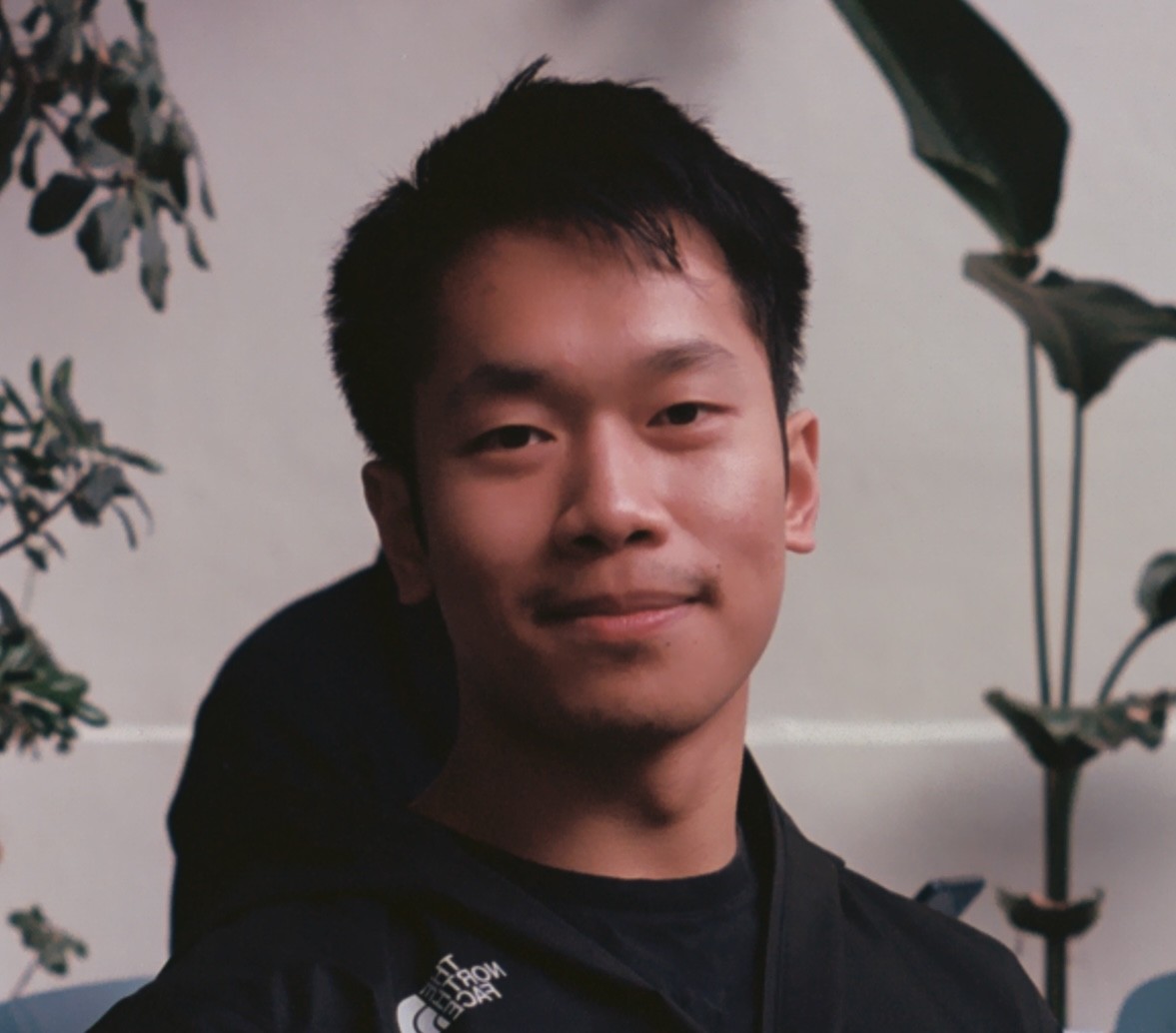
Your instructors and mentors
Our instructors hail from top academic institutions and leading companies, having demonstrated leadership and expertise in their respective fields.









Pricing
Choose your payment method
You can focus solely on learning technical skills and managing your own job search, or add personalized career coaching to land your next role faster.
How to apply?
Steps for registration
10 min.
Share your story with us. We want to know what motivates you to join our program.
01
02
15 min.
We want to learn more about your profile and English proficiency to help you access global AI opportunities.
4 hrs max.
We present you with a Python technical challenge. Once you pass it, you are almost done. If not, you can try again as many times as necessary.
03
04
20 min.
Finally, we will invite you to an individual interview with our admissions team to evaluate your application and get to know you.
The #1 community in LATAM
Thousands of developers have already boosted their careers in AI with us
Experiences shared by members of the Anyone AI community.
















Original testimonials from our graduates
We are accepting applications for the upcoming cohort
Apply now and receive instructions on the next steps.